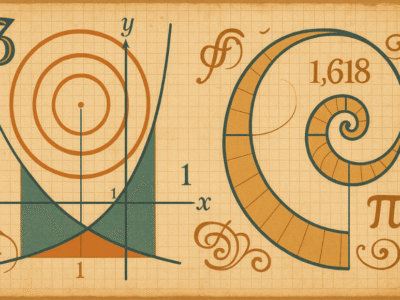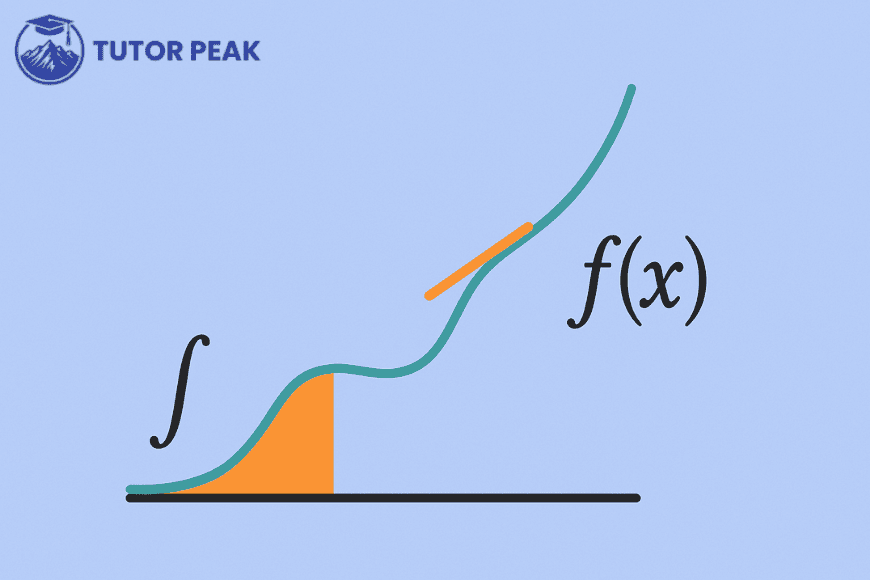
AP Calculus BC, üniversite düzeyinde bir matematik dersidir ve AP Calculus AB konularını temel alarak daha ileri düzey diferansiyel ve integral kalkülüs konularını kapsar. Matematikte güçlü bir altyapıya sahip, akademik olarak ileri düzeydeki öğrenciler için tasarlanmıştır. Ders kapsamında limitler, türevler, belirli ve belirsiz integraller, Kalkülüs’ün Temel Teoremi gibi temel konuların yanı sıra parametrik, kutupsal ve vektörel fonksiyonlar ile sonsuz seriler ve yakınsaklık gibi ileri düzey konular ele alınır.
Öğrenciler, matematiksel modelleme ve gerçek dünya uygulamaları aracılığıyla analitik düşünme ve problem çözme becerilerini geliştirirler. Ders, hem kavramsal anlayışı hem de işlem becerisini vurgular ve öğrencileri AP Calculus BC sınavına ve gelecekteki STEM (bilim, teknoloji, mühendislik, matematik) derslerine hazırlar.
Temel Konular:
Limitler ve süreklilik
Türevler ve uygulamaları
İntegraller ve uygulamaları
Diferansiyel denklemler
Parametrik, kutupsal ve vektörel fonksiyonlar
Sonsuz seriler ve yakınsaklık testleri
Ön Koşul: Pre-Calculus veya eşdeğer bir dersi başarıyla tamamlamış olmak.
Kimler İçin Uygundur? Mühendislik, fizik bilimleri, ekonomi veya ileri düzey matematik gerektiren alanlara yönelmek isteyen öğrenciler için idealdir.
Eğitim Özellikleri
- Dersler 46
- Sınav 0
- Süre 25 weeks
- Yetenek seviyesi Expert
- Dil English, Turkish
- Öğrenciler 58
- Başarı Belgesi Hayır
- Değerlendirme Evet
- 6 Sections
- 46 Lessons
- 25 Weeks
- Limits and Continuity- Master limit notation and evaluate limits using multiple techniques - Analyze continuity and identify discontinuities in functions - Apply the Intermediate Value Theorem and understand its geometric meaning6
- 1.11.1 Introduction to Limits and Limit Notation
- 1.21.2 Evaluating Limits Graphically and Numerically
- 1.31.3 Limit Laws and Algebraic Techniques
- 1.41.4 Limits Involving Infinity and Asymptotic Behavior
- 1.51.5 Continuity and the Intermediate Value Theorem
- 1.61.6 Limits of Trigonometric and Special Functions
- Differentiation - Foundations and Applications- Master differentiation rules and techniques for all function types - Apply derivatives to solve optimization and related rates problems - Analyze function behavior using first and second derivatives9
- 2.12.1 The Derivative as a Rate of Change and Slope
- 2.22.2 Derivative Rules: Power, Product, Quotient, and Chain Rules
- 2.32.3 Derivatives of Trigonometric, Exponential, and Logarithmic Functions
- 2.42.4 Implicit Differentiation and Related Rates
- 2.52.5 Linear Approximation and Differentials
- 2.62.6 L’Hôpital’s Rule for Indeterminate Forms
- 2.72.7 Mean Value Theorem and Rolle’s Theorem
- 2.82.8 Optimization and Applied Maximum-Minimum Problems
- 2.92.9 Curve Sketching Using Derivatives
- Integration - Techniques and Applications- Master integration techniques including substitution, parts, and partial fractions - Apply definite integrals to calculate areas, volumes, and accumulated quantities - Connect the Fundamental Theorem of Calculus to derivatives and antiderivatives10
- 3.13.1 Antiderivatives and Indefinite Integrals
- 3.23.2 Riemann Sums and the Definite Integral
- 3.33.3 The Fundamental Theorem of Calculus
- 3.43.4 Integration by Substitution
- 3.53.5 Integration by Parts
- 3.63.6 Partial Fraction Decomposition
- 3.73.7 Trigonometric Integrals and Substitution
- 3.83.8 Applications: Area Between Curves
- 3.93.9 Applications: Volume by Disks, Washers, and Cylindrical Shells
- 3.103.10 Applications: Arc Length and Surface Area
- Differential Equations and Slope Fields- Solve separable differential equations and apply initial conditions - Interpret and create slope fields for first-order differential equations - Model real-world phenomena using exponential growth and decay equations5
- Parametric Equations, Polar Coordinates, and Vector-Valued Functions- Analyze motion along parametric curves and calculate derivatives, arc length, and area - Work with polar coordinates and convert between rectangular and polar forms - Apply calculus to vector-valued functions for motion analysis6
- 5.15.1 Parametric Equations and Calculus with Parametric Curves
- 5.25.2 Derivatives and Tangent Lines for Parametric Equations
- 5.35.3 Arc Length and Surface Area for Parametric Curves
- 5.45.4 Polar Coordinates and Polar Graphs
- 5.55.5 Calculus with Polar Functions: Area and Arc Length
- 5.65.6 Vector-Valued Functions and Motion in the Plane
- Infinite Sequences and Series- Determine convergence or divergence of sequences and series using multiple tests - Work with Taylor and Maclaurin polynomial approximations - Apply power series to represent functions and solve problems10
- 6.1– Determine convergence or divergence of sequences and series using multiple tests – Work with Taylor and Maclaurin polynomial approximations – Apply power series to represent functions and solve problems
- 6.26.2 Introduction to Infinite Series
- 6.36.3 Geometric Series and Telescoping Series
- 6.46.4 The Integral Test and p-Series
- 6.56.5 Comparison Tests and Limit Comparison Test
- 6.66.6 Alternating Series and the Alternating Series Test
- 6.76.7 Ratio and Root Tests for Absolute Convergence
- 6.86.8 Power Series and Interval of Convergence
- 6.96.9 Taylor and Maclaurin Series
- 6.106.10 Applications of Taylor Polynomials and Error Bounds